



Family Law

When custody disputes become highly contentious or raise concerns about a parent or child’s well-being, mental health evaluations may play an important role in guiding the court’s decision. These evaluations can offer insight into parenting capacity, emotional stability, co-parenting dynamics, or the specific needs of a child. At GHMA LAW, we help parents understand when mental health evaluations are appropriate, what the process entails, and how the results may influence custody outcomes in North Carolina.…
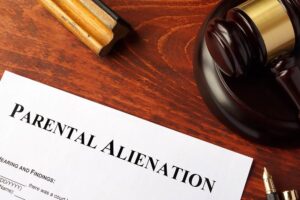
Allegations of parental alienation arise in some of the most painful and complex custody cases. When one parent believes the other is deliberately turning the child against them, it can escalate conflict and deeply impact both the parent-child relationship and the child’s emotional well-being. In North Carolina, courts take these claims seriously — but they also approach them cautiously. Not every damaged relationship is the result of alienation, and accusations can sometimes be used to…

During the pretrial discovery phase of a divorce and in child custody matters it is not uncommon for the opposing party to request your medical records. Whether an outside party is entitled to see your medical records is a matter that can be litigated, but generally speaking, when the records are relevant to the issues at hand, the opposing party may be justified in obtaining them. Your private health records can not be acquired by…

GHMA LAW partners Patrick McCroskey and Janet Amburgey have been recognized by North Carolina Super Lawyers 2023. Patrick has been included at Super Lawyers for 12 consecutive years, while Janet has been included on the list since 2020. Patrick McCroskey is a North Carolina Board Legal Specialist in Family Law and a Fellow of the American Academy of Matrimonial Lawyers and is an AV Preeminent Rated Lawyer at Martindale-Hubbell. He is consistently recognized in the…

If you have received an inheritance, or a gift, or anticipate receiving either in the future, you may be wondering how you can protect it from your spouse in the event of a separation and divorce. In North Carolina when spouses divorce all property acquired by either spouse during the marriage is automatically presumed to be “marital property” and therefore subject to equitable distribution. There are exceptions to the marital property assumption. One of those…
