



Family Law

The North Carolina Child Support Guidelines provide a formula for determining the presumptive child support obligation for parties’ whose combined adjusted gross income is $300,000 per year or less. The child support guidelines allow various factors to be taken into consideration when determining each parent’s presumptive child support obligation. These various factors include, but not are not limited to, adjustments for work-related child care expenses, health and dental insurance expense for the child, and a…

Separate property is considered property (either an asset or debt) that belongs to one spouse individually. Separate property is not subject to equitable distribution and its value is not included in the marital estate. Separate property includes: property that was owned by a spouse prior to marriage; property acquired in exchange for separate property; and property that was received by gift or inheritance. It is well established that gifts to a spouse from a third-party…
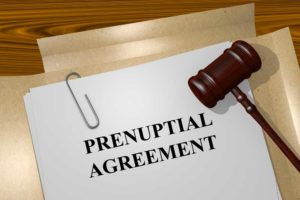
As its name implies, a premarital agreement (also known as a prenuptial agreement) is an agreement that parties enter into before marriage. To be considered a valid premarital agreement, the agreement must be in writing and signed by both parties before the marriage. The agreement becomes effective when the parties are married. In the event the parties do not sign a premarital agreement before they are married, they cannot sign such an agreement after they…

Separation agreement is a general term used to describe a written contract that spouses enter into to address some or all issues arising from their marital separation. A separation agreement may be a simple agreement that establishes the parties’ date of separation, or it may deal with broader issues, including child custody, child support, alimony, and/or division of marital property and debts. In North Carolina, there is no law that requires spouses to sign a…

The stress, anxiety, uncertainty, and emotional upheaval that come with the divorce process can bring out the worst in otherwise good people. Divorce attorneys are well accustomed to hearing clients say: “I want my ex to pay!!!” Usually such comments are innocuous and made as exaggerated expressions of hurt or anger. However, there are some who attempt to abuse or manipulate the legal process for unfair advantage or revenge toward their spouse. In a family…
