



The Role of the Mediator: Neutral Facilitator & Settlement Architect
From the Perspective of a Certified Family Financial Mediator
Divorce and family disputes are some of the most emotionally charged legal challenges people face but resolution doesn't have to come from a judge - it can come from the parties themselves. In North Carolina, mediation offers families an alternative path forward. At the center of that process is the mediator: a specially trained neutral who facilitates settlement, fosters communication, and helps parties craft legally enforceable agreements outside of the courtroom.
But what does a mediator actually do? And how is that role different from a judge, lawyer, or counselor? Let’s break it down.
A Legal Role, Not a Judicial One
In North Carolina family law matters, mediators are not decision-makers. They do not render judgments or impose outcomes. Instead, they guide the parties through structured negotiations to help them reach voluntary agreement on contested issues like equitable distribution, alimony, and attorney fees.
A certified Family Financial Mediator like those at GHMA | LAW brings specialized training and subject matter expertise in divorce law, financial analysis, and dispute resolution. These mediators understand both the legal framework and the emotional landscape of family separation.
They are neutral, meaning they do not represent either party and cannot provide legal advice. However, they do ensure that both sides are heard, help clarify issues, reality-check expectations, and assist with option development and settlement design.
How the Mediator Facilitates Resolution
A skilled mediator does much more than simply pass proposals back and forth between rooms. The mediator’s role includes:
- Structuring the session: Setting expectations, establishing rules, and managing the flow of negotiation.
- Clarifying legal and financial issues: Helping parties and their attorneys frame the issues in productive terms and avoid common dead ends.
- De-escalating conflict: Keeping discussions focused and constructive — even when tensions are high.
- Exploring outcomes: Identifying shared goals, proposing creative options, and bridging gaps between positions.
- Drafting agreements: Helping memorialize terms into a clear summary, which attorneys may later finalize into a formal order or separation agreement.
Every step is geared toward durable, workable solutions that both parties can accept - not forced compromises, but well-informed settlements that reflect each party’s priorities and legal rights.
The Mediator’s Legal Expertise Matters
In North Carolina, Family Financial Mediators must meet stringent certification requirements set by the North Carolina Dispute Resolution Commission. Many, including the mediators at GHMA | LAW, are also Board Certified Specialists in Family Law, bringing deep legal insight to the mediation table.
This dual qualification allows our mediators to understand the legal consequences of proposed settlements, evaluate fairness and feasibility, and ensure that parties are negotiating in a legally sound environment. This legal competence is especially important when complex financial issues, retirement assets, business interests, or tax consequences are in play.
Not Just a Go-Between - A Settlement Architect
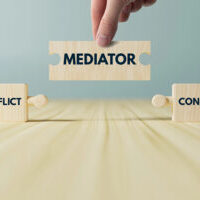
Mediators are not just passive messengers. Think of a good mediator as a settlement architect — someone who works with both parties and their attorneys to design a legally enforceable agreement that makes sense today and stands the test of time. They structure the process, manage momentum, and help parties overcome impasse with reasoned, reality-based guidance.
At GHMA | LAW, our mediators balance neutrality with active engagement. We don’t tell parties what to do — but we do ensure that they have the structure, support, and clarity they need to resolve their dispute wisely.
Mediation Services at GHMA | LAW
Whether you're here at the suggestion of your attorney or independently seeking to understand how family law mediation works, the resources on our website are designed to provide clarity, not confusion. At GHMA | LAW, our certified Family Financial Mediators work with parties who are represented by counsel to resolve divorce-related disputes through structured, confidential negotiation.
While our mediators do not typically conduct sessions where one or both parties are unrepresented, we recognize that many individuals research mediation as a potential alternative to litigation. These resources are here to help you better understand how mediated agreements are reached. When divorcing individuals are prepared and supported by legal counsel, mediation often provides a more focused, respectful, and less adversarial path forward.
As Board Certified Specialists in Family Law and Certified Family Financial Mediators, we provide not only dispute resolution, but also clarity, structure, and an environment that honors the emotional weight of this transition. We offer these materials to help you understand the mediation process from both a practical and human perspective. If you have additional questions, we encourage you to speak with your attorney or reach out to us for more information.
Key Takeaways
- The mediator is a neutral third party who facilitates, but does not decide, legal outcomes.
- Certified Family Financial Mediators use legal knowledge to guide productive negotiation and ensure enforceable agreements.
- At GHMA | LAW, mediators act as both facilitators and settlement architects — ensuring structure, neutrality, and clarity in the resolution process.
Mediation & Arbitration Services

828-258-3368
Mediators
Arbitrators
Professional Neutrals
Most Recent Mediation Articles
*The element below may not be screen reader friendly. It is a list of scrolling articles from our divorce blog. See our full list of DIVORCE ARTICLES.






Common Questions & Concerns
Click on the titles below to toggle on and off pertinent information.
In a domestic dispute, negative emotions such as hostility, anger, and revenge can needlessly delay a resolution and increase the cost. Perspective and objectivity, on the other hand, can promote a conclusion and reduce the cost.
Many factors may be involved in the breakup of your marriage, and you may feel indignation, anger and resentment toward your spouse. You may want to punish your spouse by making the process difficult and time-consuming. This type of thinking usually results in a no-win situation for everyone concerned.
Often, a potential client visits an attorney to discuss divorce, although they have not yet made the decision to take the big step. First, they want to know their options. Attorneys typically encourage them to explore alternatives, and often suggest how to protect themselves and meet their needs, short of divorce.
If your attorney raises the issue of reconciliation, he is not questioning or judging your decision. But, it is clarifying and confirming that you know your options, and that you want a divorce.
The mediator’s role is to move the parties beyond personality clashes and historic grievances. Only then, can the mediator help you improve communication so any future dealings can take place without repeating the difficulties of the past. Mediation is a useful tool because it adds a new dimension to the negotiations. Because the mediator’s purpose is to help guide you to find solutions that you can both agree to, he/she does not have the power to decide your case, or in any other way, act as a judge nor does he/she have a fixed result in mind to urge you toward.
As you begin the divorce process, the first order of business is to review your will. If you do not have one, get one immediately. Succession laws may conflict with your wishes.
You may choose to consult David Hillier, of this law firm, regarding your will, as well as any financial concerns and considerations you may have.
Generally speaking, it is impossible to predict exactly how long the case will take. After the case is under way, and your attorney understands the issues, he will be better able to gauge the duration. How long it will take depends on the following factors:
- The number and complexity of contested issues;
- The attitudes of each of the parties, their attorneys, and their inclination to settle;
Mediation is a process in which two or more people involved in a dispute come together voluntarily to try to develop a solution to their problem with the help of a neutral third person (or persons), called the mediator. Unlike a judge or an arbitrator, the mediator does not take sides or make decisions. The mediator, usually trained in conflict resolution, is there to help the disputants evaluate their goals and options in order to formulate their own solution. To achieve the fairest results possible, you both take an active part in your divorce and turn what could be a battle for control into a search for mutually beneficial solutions.
Mediation can take place over a series of sessions. But, more often than not, it is scheduled for a continuous amount of time to keep the negotiations going. Sessions are generally held in the privacy of the mediator’s office or an attorney’s office, and begin with all involved signing an agreement that the negotiations will be kept confidential. At the end of a successful mediation, the mediator will prepare a Memorandum or writing expressing the agreements of the parties, at least on the issues which were resolved. Any formal agreement will be drafted by your or your spouse’s lawyer.
The mediator’s role is to move the parties beyond personality clashes and historic grievances. Only then, can the mediator help you improve communication so any future dealings can take place without repeating the difficulties of the past. Mediation is a useful tool because it adds a new dimension to the negotiations. Because the mediator’s purpose is to help guide you to find solutions that you can both agree to, he/she does not have the power to decide your case, or in any other way, act as a judge nor does he/she have a fixed result in mind to urge you toward.
Mediators can increase the likelihood of a negotiated settlement by bringing the skills, creativity, and influence of trained, impartial third parties to bear on the problem. Perhaps more importantly, frequently mediation can save time and money.
Mediation keeps your options open and reduces issues of conflict. Although most who undertake mediation have a successful conclusion, some do not. If mediation doesn’t work, you can still sue and go to court or engage in arbitration.
Domestic disputes are emotionally charged. Clients are encouraged to seek counseling before and during the process. Counseling can help clients to work through their pain, accept the marriage’s end, learn coping skills, and pick up the pieces of their lives and go forward.
Don’t wait for your spouse to agree to participate. Individual counseling can help. Often, children and parents attend counseling together to alleviate the effects of a divorce or custody dispute on the children, and to help the family heal emotionally.
Litigation often spawns more litigation. To determine whether certain issues are worth litigating, you must weigh the price you will pay with your time, emotions, and money, against the anticipated outcome and its benefit to you. Again, your attorney will advise you on these matters.
Dating prior to the final divorce: Don’t, unless your attorney has specifically advised you that it is okay.
Attorneys who specialize in Divorce and Family Law will probably try many cases against each other over the years. They will attend the same professional events and, may even work on committees together. Camaraderie develops naturally over the years. Just because your attorney and your spouse’s attorney exchange pleasantries, share a joke, or have lunch together, does not mean that they are being disloyal to their clients. Your attorney is professionally committed to the best result for you given the facts of your case and the law. Being rude, hostile, or mean to opposing counsel does nothing to further your case and generally harms your case rather than helping.
All too often, the client has the attitude that a lawyer who is a “fighter” is a lawyer who refuses to cooperate with opposing counsel, makes demands and gets instant results, goes to court at the drop of a hat, and plays Perry Mason in court. This notion is sadly misguided.
The time to fight may be during tough negotiations or in court. But, not cooperating on routine matters accomplishes only greatly increased attorney fees because it requires both attorneys to do everything the hard way. Cooperation by the attorneys, as well as the parties, particularly during the discovery phase, is always in the best interest of the client.
Social Media is a new facet of communication today. We understand that everyone participates in social media to some degree. When you are involved in divorce proceedings or any type of litigation for that matter, a good general practice is to avoid discussing any element of your case, or your spouse, in any social media forum. All social media is discoverable, and it never goes away. If you are considering divorce or litigation, be very careful what you say in online forums, including email attached to social media sites like Facebook, LinkedIn, and MySpace.
Just as it is impossible to predict exactly how long your case will take, it is difficult to realistically estimate the total cost of your litigation, even when your attorney knows the issues that will be contested and the strength of the parties’ feelings. If you and/or your spouse have completely lost trust in one another, want complete discovery on all issues, and desire to argue many issues to the bitter end, the process will be long, drawn-out and expensive. read more >>>
